
Peak Season Onboarding: Getting Temp Workers Productive in One Shift
It's early October, and somewhere in a retail distribution center, an operations leader is looking at a peak season staffing plan with a lot of new names on it.


An associate on the receiving dock sees a better way to flag damaged pallets. She's watched the same workflow process slow her team down for months, and she finally says something to her supervisor.
A new mobile app rolls out to the distribution center floor. IT calls it a launch. Operations calls it a pilot. The associates who actually have to use it call it something else: one more thing standing between them and rate.
Walk into any large retailer’s supply chain operations review and you will see roughly the same dashboard. On-time, in-full. Inventory turns. Cost per unit shipped. Picks per hour. Forecast accuracy.
In the high-stakes world of retail logistics, we are witnessing an arms race of automation. From autonomous mobile robots (AMRs) scurrying across distribution center floors to sophisticated AI algorithms predicting seasonal demand spikes
By 2030 most supply chain activities will be 70-80% AI-driven. Repetitive events such as requisitioning, order management, contracting, payment, accounting and recurring sourcing events will be triggered and executed by algorithms.
Supply Chain Management (SCM) Operators need the ability to rapidly collect and process huge volumes of data to rapidly reduce manual work, eliminate errors, and improve operational velocity and efficiencies. Logistics Providers need to identify and rapidly deliver documented operating efficiencies to customers.
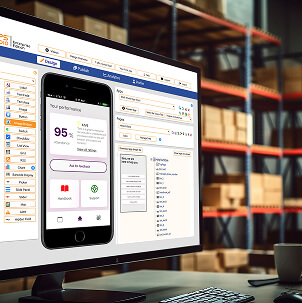
ViziApps now provides a ViziApps template app callced OSHA Safety Audits sample app. The ViziApps mobile version provides a tangible ROI for inspection tasks, saving from $150 to $300 per inspection by providing significant time savings.